
Bonus amounts and T&Cs may vary based on your location.
- Recommended
- Rating (Highest)
- Rating (Lowest)
- Bonus (Highest)
- Bonus (Lowest)
- Newest
- Oldest
- A-Z
- Z-A
The growing number of online casinos in Lithuania stems from deliberate legislative changes that have been implemented over the past few years and the ongoing influence of global gambling networks. Access to gaming is no longer limited to land-based venues, and offshore providers continue to serve local users with fewer barriers. This guide provides an in-depth look at how online gambling functions in Lithuania today, examining crucial factors such as licensing, responsible play tools, and cross-border access.
Bonus amounts and T&Cs may vary based on your location.
If a company wants to offer casino games legally in Lithuania, it needs a local licence from the Gaming Control Authority, which operates under the Ministry of Finance. Until 2022, operators had to have physical venues inside the country, like slot halls, betting shops, or land-based casinos, but that rule has since been scrapped off.
Plenty of online casinos that don’t hold a Lithuanian licence still accept players from the country. These include major brands licensed in Malta or Curaçao, among others. Players are not punished for using them. However, these platforms aren’t recognised by Lithuanian authorities, and the government regularly blocks unlicensed domains through local ISPs.
Casinos, even licensed ones, cannot market their services directly to consumers. Sponsorships are the one exception, but those are carefully regulated and mostly limited to sports.What this means is that discovery happens through independent reviews, player recommendations, or casino ranking platforms.
Land-based casinos and slot halls follow a different set of rules. They are still regulated by the Gaming Control Authority, but they operate under physical gaming laws rather than online provisions. Tax rates, surveillance systems, staffing levels, and payouts are all regulated separately.

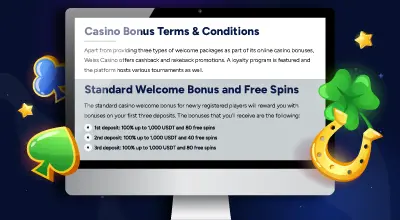
Many online casinos on our list are offering exciting bonuses tailored just for Lithunian players. Whether you’re into slots, live dealer games, or sports betting, there’s something on offer to boost your bankroll. Below, we break down the most popular bonus types available at Lithuanian-friendly casinos:
Casinos in Lithuania have only existed within a legal framework since the early 2000s. Before that, gambling remained largely underground, with little state involvement. Legalisation introduced formal rules, licensing requirements, and state-regulated access.
Before 1990, Lithuania didn’t regulate gambling. As part of the Soviet Union, any formal structure simply didn’t exist. What did exist were informal card games, bingo halls, lotteries, and underground betting, often ignored, occasionally shut down, but never properly controlled.
In 2001, the now Republic of Lithuania passed its first comprehensive gambling law. This brought slot machines, table games, lotteries, and sports betting under state oversight. From there, regulation began to take on a more defined shape. This law also introduced licensing for physical venues, setting minimum standards for equipment, location, and surveillance.
The government legalised online gambling in 2016. From that point on, Lithuanian operators could apply for digital licences, provided they already ran a licensed land-based operation. The same year, the Gaming Control Authority of Lithuania began compiling a blacklist of unauthorised sites. ISPs were told to block these domains.
New amendments in 2021 banned all forms of gambling promotion. That included banner ads, email marketing, affiliate links, and influencer content. Sponsorships stayed legal but came under tighter restrictions. Operators also faced stronger requirements for responsible gambling, including tools for setting deposit limits, time caps, and cool-off periods.
Starting 1 July 2022, the Gaming Law of Lithuania took its last shape and operators no longer needed a physical gambling venue to enter the Lithuanian online market. A standalone online gambling licence was now accepted for digital-only operations. However, online lottery licences still remain limited to companies with a legal presence in Lithuania.
Lithuania’s entire gambling framework (online and offline) is managed by the Gaming Control Authority of Lithuania. This agency grants licences, enforces compliance, and audits operators for violations.
This body monitors payout percentages, track anti-money laundering protocols, require detailed monthly financial reports, and conduct periodic inspections. Failure to meet these standards can result in heavy fines or permanent licence suspension.
To be eligible for a licence from the country’s gaming authority, a company must:
Once granted, licences remain valid as long as these conditions are upheld. Operators also face limits on how games can be displayed, marketed, and structured.

With the online casino landscape expanding, gamblers must decide between operators licensed within Lithuania and foreign platforms not subject to national law. The following comparison highlights key aspects around operational control, security, and trust.
Game selection is one of the biggest strengths particularly for new online casinos in Lithuania. Players want fast rounds, clean visuals, and games that load smoothly across devices. Most platforms let users play in Lithuanian and support EUR as the main currency.
Most casinos refresh their game libraries regularly. Popular software providers include Evolution, NetEnt, and Pragmatic Play.
Lithuanian online casinos offer a safe and regulated environment for players, combining local support and reliable payment options with tailored promotions. While these casinos provide a trustworthy platform with legal protections, players should be aware of some limitations and challenges. Below, we’ll explore the main advantages and disadvantages of playing at online casinos licensed in Lithuania.
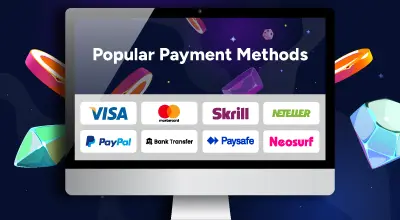
Lithuanian players have a solid range of trustworthy payment options, especially when using internationally licensed platforms. Most online casinos accept Euro deposits and withdrawals, with fast processing times particularly on eWallets and cryptocurrency. Card payments and bank transfers are also widely supported.
Easily available and familiar. Deposits are usually instant while withdrawals at Visa casinos and Mastercard casinos typically take between one and three business days, depending on the bank.
These eWallets are very reliable for rapid payments. Skrill and Neteller withdrawals at online casinos process within 24 hours.
This is a standard option for larger sums but slower. Bank transfer casinos can take up to five business days to pay out your winnings.
This popular payment gateway at Trustly casinos facilitates direct payments from Lithuanian bank accounts. On Pay N Play casinos, registration is skipped entirely.
Prepaid vouchers used mainly for deposits. Unfortunately, PaysafeCard casinos do not support withdrawals.

Nightrush worked on the backend of a busy casino platform, built bonus systems, reviewed game integrations, and dealt with real-world player concerns. That history helps us filter noise and recognise what genuinely matters to players in Lithuania.
Any casino we recommend must hold a valid licence, ideally from a strong regulator. However, we go further and pull reports, scan player complaints, and track patterns. If we see withdrawal issues, slow support, or sudden bonus rule changes, we don’t list it.
Attractive welcome packages mean nothing if the conditions are vague or unfair. We read the fine print, check the rollover, look for max payout limits, and see how different games contribute. If the rules are hidden or unclear, it doesn’t qualify, no matter the size of the bonus.
Casinos that advertise instant withdrawals but take days to pay do not last on our list. We sign up, deposit, play, and withdraw real funds. That’s how we verify transaction speed, check currency compatibility with the euro (€), and confirm whether Lithuanian players face limits or delays.
We create new accounts, contact support with questions, and simulate verification scenarios. Casinos that hide key terms, respond slowly, or pressure players to deposit fail our test. A flashy launch means little if the platform fails to maintain a standard.
The sign-up process is quick on most platforms. Lithuanian players can create an account with an email address, deposit using a preferred method, and begin playing within minutes. Verification may be required, depending on the casino’s licensing authority.
As with most countries across Europe, casino players in Lithuania are not required to pay tax on online gambling winnings at tax-free casinos. The responsibility lies with the operator. This applies to both locally licensed platforms and international casinos. There is no need to declare winnings on personal income tax returns.
However, casino operators must report revenue and payout data to Lithuanian authorities and comply with AML regulations. Winnings earned abroad are not subject to additional tax unless classified under commercial activity, which does not apply to regular casino play.
Licensed safe casino operators in Lithuania must provide clear and enforceable responsible gambling tools. These tools are required under national regulation and must be available to all registered users.
Players can apply fixed daily, weekly, or monthly deposit limits directly within their accounts. Additional measures include time limits on gameplay sessions and the option to activate temporary or permanent self-exclusion. These restrictions apply across all licensed operators when submitted through the national register.
The Gaming Control Authority maintains and enforces the centralised self-exclusion system. Applications must be submitted via its official site. Once registered, the exclusion is applied uniformly and remains active until the selected term ends.
Additionally, the Vilties Linija (Hope Line) provides free and confidential support to anyone in Lithuania affected by gambling-related stress. It operates 24/7 and offers both phone-based assistance and professional referrals.
Casinos operating without these controls should not be used. Verified operators must present responsible gambling features in all account menus and customer support pages.

Having looked at the full scope of Lithuania’s iGaming industry, it’s clear that players can access a regulated market offering legal clarity, support for key currencies, including the EUR, and mandatory safety controls. Each registered operator must meet licensing rules and offer visible tools for managing time, spending, and account access.
Casino platforms available to Lithuanian users are generally transparent about terms, use reliable payment processors, and support play in euros. This creates a consistent, user-focused experience from sign-up through to withdrawal.
To sum it all, when playing through regulated sites, Lithuanian players benefit from protection, access to certified games, and formal support if disputes arise. Every layer is built to maintain trust and compliance within this fast-growing digital gaming market. For those interested in speed and ease, no verification casinos are becoming increasingly popular as they let users enjoy gaming without lengthy identity checks.
Euro is the default currency for nearly all licensed operators available to Lithuanian players. Payments made in other currencies are often converted automatically and may involve a fee.
Slots, table games, and live dealer titles are widely used. Poker and roulette also attract consistent interest. All games must be approved and certified under regulatory conditions.
Gambling winnings are not taxed at the player level. Gambling platforms are liable for meeting applicable tax obligations.
Unlicensed casinos operate without regulatory obligations. They may apply vague terms, slow payouts, or deny access to responsible gambling tools. There is no formal dispute process available.